Learn Emotional & Survival Japanese with “Future Diary” (未来日記): Casual Speech, Threats & Conditionals
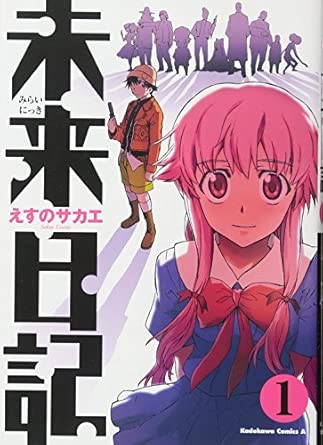
Quick links to search for the manga on Amazon.
A subscription is required, but you can start a Free Trial here。
Availability varies by region. Searches open in a new tab.
1) Manga Overview: What Is “Future Diary”?
Future Diary (未来日記) follows Amano Yukiteru, a shy middle schooler whose phone diary suddenly starts filling with entries describing events that have not yet happened. He discovers that he and eleven other “diary holders” have been forced into a deadly survival game by the god of time and space, where the last survivor becomes the new god. The story mixes everyday school scenes with shocking violence, police investigations and cult activity, and the contrast makes the emotional Japanese especially vivid. Gasai Yuno, the fiercely devoted and unstable heroine, is one of the series’ big appeals, constantly switching between sweet, affectionate speech and terrifying threats.
What Japanese culture and workplace customs can you learn?
For learners, 未来日記 offers a lot of natural teen casual speech, panicked reactions, and urgent commands, balanced with polite and semi-formal Japanese used with teachers, police officers and other adults. You can pay attention to how characters switch from relaxed talk to clipped, direct orders as danger increases, and how conditionals express possible futures and worst‑case scenarios. It is also a good resource for vocabulary about time, prediction, survival and mental states such as fear and determination.
-
Teen Casual Speech & Nicknames:
Learn how classmates talk to each other with sentence‑ending particles like よ, ね, さ and shortened forms such as ~てる and ~じゃん, as well as the way Yuno calls Yukiteru by his nickname ユッキー.
-
Fear, Panic & Reassurance:
The survival game setting is full of phrases that show fear (こわい, やばい, 無理), panic (どうしよう, 逃げなきゃ) and trying to calm others down (大丈夫だよ, 落ち着いて). These are very useful for everyday emotional Japanese, not just action scenes.
-
Threats, Warnings & Ultimatums:
Characters often use conditionals and strong modality to threaten or warn others, for example ~ないと殺す, ~したら許さない, or ~しなきゃお前が危ない. Studying these patterns helps you understand intense dialogue in many anime and dramas.
-
Talking to Adults & Authorities:
When speaking with teachers, parents, police, or other adults, characters shift into です・ます style and more polite request forms like ~てください and ~てもらえますか, which contrasts clearly with their usual casual talk.
-
Conditionals & Possible Futures:
Because the story is about predicting the future, you constantly see conditionals like ~たら, ~なら, ~と and modal expressions such as ~かもしれない and ~に違いない. These are key grammar points for describing plans, risks and hypothetical situations.
-
Inner Monologue vs. Spoken Lines:
Yukiteru’s diary entries and inner thoughts often use plainer, more neutral Japanese than his spoken lines. Comparing monologue text with speech bubbles is a good way to feel the difference between written-style and spoken-style Japanese.
2) Practical Use Cases: Where You’ll Use This Japanese
Targets: school conversations with friends, emotional arguments, talking about danger and safety, discussing plans and predictions, reacting to emergencies, interacting with police or teachers
Politeness vs. Distance (丁寧度×距離感): Quick Comparison
| Function | Casual (friends, close rivals) | Standard Polite (teachers, strangers) | Formal / Deferential (police, higher status) |
|---|---|---|---|
| Request | 「ちょっと待ってて。」 Reading: ちょっと まってて。 / chotto mattete. EN: Wait a sec. |
「少々待ってください。」 Reading: しょうしょう まって ください。 / shōshō matte kudasai. EN: Please wait a moment. |
「少々お待ちいただけますか。」 Reading: しょうしょう おまち いただけますか。 / shōshō omachi itadakemasu ka. EN: May I ask you to wait a moment? |
| Refusal | 「無理、できない。」 Reading: むり、できない。 / muri, dekinai. EN: No way, I can’t. |
「すみません、それはできません。」 Reading: すみません、それは できません。 / sumimasen, sore wa dekimasen. EN: I’m sorry, I can’t do that. |
「申し訳ありませんが、そのご要望にはお応えしかねます。」 Reading: もうしわけ ありませんが、その ごようぼう には おこたえ しかねます。 / mōshiwake arimasen ga, sono goyōbō ni wa okotae shikanemasu. EN: We regret that we are unable to meet that request. |
| Warning / Threat | 「これ以上近づいたら、やるぞ。」 Reading: これいじょう ちかづいたら、やるぞ。 / kore ijō chikazuitara, yaru zo. EN: Come any closer and I’ll take you down. |
「それ以上近づかないほうがいいですよ。」 Reading: それいじょう ちかづかない ほうが いいですよ。 / sore ijō chikazukanai hō ga ii desu yo. EN: You really shouldn’t come any closer. |
「これ以上お近づきになるのは、お控えいただいたほうがよろしいかと存じます。」 Reading: これいじょう おちかづき に なるのは、おひかえ いただいた ほうが よろしいかと ぞんじます。 / kore ijō ochikazuki ni naru no wa, ohikae itadaita hō ga yoroshii ka to zonjimasu. EN: I must ask that you refrain from approaching further. |
| Confirmation | 「本当にそうなの?」 Reading: ほんとうに そうなの? / hontō ni sō na no? EN: Is that really true? |
「本当にそうなんですか。」 Reading: ほんとうに そうなんですか。 / hontō ni sō nan desu ka. EN: Is that really the case? |
「本当にそのような認識で間違いございませんか。」 Reading: ほんとうに そのような にんしきで まちがい ございませんか。 / hontō ni sono yōna ninshiki de machigai gozaimasen ka. EN: May I confirm that this understanding is correct? |
3) Key Survival & Relationship Scenes (Paraphrased) with Readings
Scene digest: Yukiteru notices that his phone diary is somehow recording events before they happen and tries to confirm what he is seeing.
「えっ、これ……未来のことが書いてあるの?」
Reading: えっ、これ……みらい の こと が かいてあるの? (e, kore... mirai no koto ga kaite aru no?)
EN: Huh, this... it says what will happen in the future?
Scene digest: Yuno reassures Yukiteru in a dangerous situation, using soft but very intense language to show her obsession.
「ユッキーは私が守るから、だから信じて。」
Reading: ゆっきー は わたし が まもるから、だから しんじて。 (Yukkī wa watashi ga mamoru kara, dakara shinjite.)
EN: I’ll protect you, Yukki, so trust me.
Scene digest: Cornered by another diary holder, a character states that if they do not attack first, they will be killed, using a conditional to express an ultimatum.
「ここでお前を倒さないと、俺がやられる。」
Reading: ここで おまえ を たおさないと、おれ が やられる。 (koko de omae o taosanai to, ore ga yarareru.)
EN: If I don’t take you down here, I’ll be the one who dies.
Scene digest: When questioned by adults about an incident, Yukiteru switches into polite speech to explain what happened.
「すみません、さっきのことを少しお話ししてもいいですか。」
Reading: すみません、さっき の こと を すこし おはなししても いいですか。 (sumimasen, sakki no koto o sukoshi ohanashi shite mo ii desu ka?)
EN: Excuse me, may I talk a bit about what happened just now?
4) Language Breakdown: Vocabulary, Grammar & Discourse
Vocabulary (with collocations)
| Headword | Reading (kana / romaji) | Meaning | EN | Collocations | Near-synonyms / Register |
|---|---|---|---|---|---|
| 未来日記 | みらい にっき / mirai nikki | 未来のできごとが書かれた日記(作品内の重要アイテム) | future diary; a diary that records future events (key item in the story) | 未来日記の所有者/未来日記に書く/未来日記が更新される | 予知日記(fictional, “prediction diary”)、手帳(neutral: notebook, planner) |
| 所有者 | しょゆうしゃ / shoyūsha | ある物を持っている人・権利を持つ人 | owner; holder; person who possesses something or has the rights to it | 日記の所有者/土地の所有者/所有者を特定する | 持ち主(more casual “owner”)、オーナー(loanword, often for shops, pets, etc.) |
| 生き残る | いきのこる / ikinokoru | 死なずに残ること、生存し続けること | to survive; to remain alive | 最後まで生き残る/生き残った人たち/生き残るために戦う | 生存する(formal “to exist, to survive”)、助かる(to be saved, escape harm) |
| 予知 | よち / yochi | 前もって知ること。将来のできごとの予測。 | premonition; foreknowledge; prediction of future events | 未来を予知する/予知能力/地震予知 | 予言(often religious or prophetic)、予測(general “prediction, forecast”) |
| 覚悟 | かくご / kakugo | 悪い結果などを受け入れる決心 | resolve; readiness to face danger or a bad outcome | 覚悟を決める/死ぬ覚悟/覚悟はできている | 決意(decision, determination; slightly calmer tone)、腹をくくる(colloquial “to steel oneself”) |
| 監視 | かんし / kanshi | 注意して見張ること | surveillance; monitoring; keeping watch | カメラで監視する/監視下に置く/監視体制 | 見張り(more concrete “lookout, guard”)、チェック(casual “check, keep an eye on”) |
| 狂気 | きょうき / kyōki | 常軌を逸した異常な精神状態 | madness; insanity; extreme, abnormal mental state | 狂気じみた笑い/狂気に満ちた行動/狂気の沙汰 | 精神異常(clinical, formal term)、正気を失う(to lose one’s sanity) |
| サバイバルゲーム | さばいばる げーむ / sabaibaru gēmu | 生き残りをかけて戦うゲームや状況 | survival game; situation where people fight to stay alive | サバイバルゲームに巻き込まれる/命がけのサバイバルゲーム/サバゲー(short casual form) | デスゲーム(death game; darker nuance)、バトルロイヤル(battle royale style fight) |
Grammar & Discourse
~ないと often appears in tense scenes to mean “if (I) don’t …, (something bad will happen)” and in the fuller form ~ないといけない / ~なきゃいけない to show obligation. In fast dialogue, the second half is frequently dropped because the consequence is obvious from context.
Example (JP): このまま戦わないと、こっちがやられちゃう。
Reading: このまま たたかわないと、こっち が やられちゃう。 (kono mama tatakawanai to, kocchi ga yararechau.)
EN: If we don’t fight now, we’re the ones who’ll be killed.
~しかない shows that there is only one option left. In 未来日記 it is used when characters are cornered and have to choose a risky action, but it is also common in everyday conversation when you resign yourself to something.
Example (JP): ここは逃げるしかない!
Reading: ここは にげる しかない! (koko wa nigeru shika nai!)
EN: At this point we have no choice but to run!
~ようとする describes an attempt or an action that is just about to happen. In suspense scenes it often appears when someone is trying to call, escape, or attack, sometimes interrupted by another event.
Example (JP): 雪輝は由乃に電話しようとしたが、電波がなかった。
Reading: ゆきてる は ゆの に でんわ しようと したが、でんぱ が なかった。 (Yukiteru wa Yuno ni denwa shiyō to shita ga, denpa ga nakatta.)
EN: Yukiteru tried to call Yuno, but there was no signal.
~かもしれない expresses uncertainty: “might” or “maybe”. It is essential for talking about possible futures, dangers, and guesses, which is exactly what characters often do when reading their diaries.
Example (JP): 次のターゲットは自分かもしれない。
Reading: つぎ の たーげっと は じぶん かもしれない。 (tsugi no tāgetto wa jibun kamoshirenai.)
EN: The next target might be me.
5) Onomatopoeia & Emotion (Tension and Fear in 未来日記)
- ドキドキ / dokidoki
- ギャー / gyā
- ガタガタ / gatagata
- シーン / shīn
- バキッ / baki
- ズキズキ / zukizuki
6) Summary
“Future Diary” (未来日記) is great for practicing fast, emotional teen Japanese in high‑stress situations, from casual talk with friends to tense confrontations with adults and enemies. Learners can focus on conditionals, warnings, and expressions of fear, resolve and obsession that appear throughout the survival game.
Quick links to search for the manga on Amazon.
A subscription is required, but you can start a Free Trial here。
Availability varies by region. Searches open in a new tab.


